

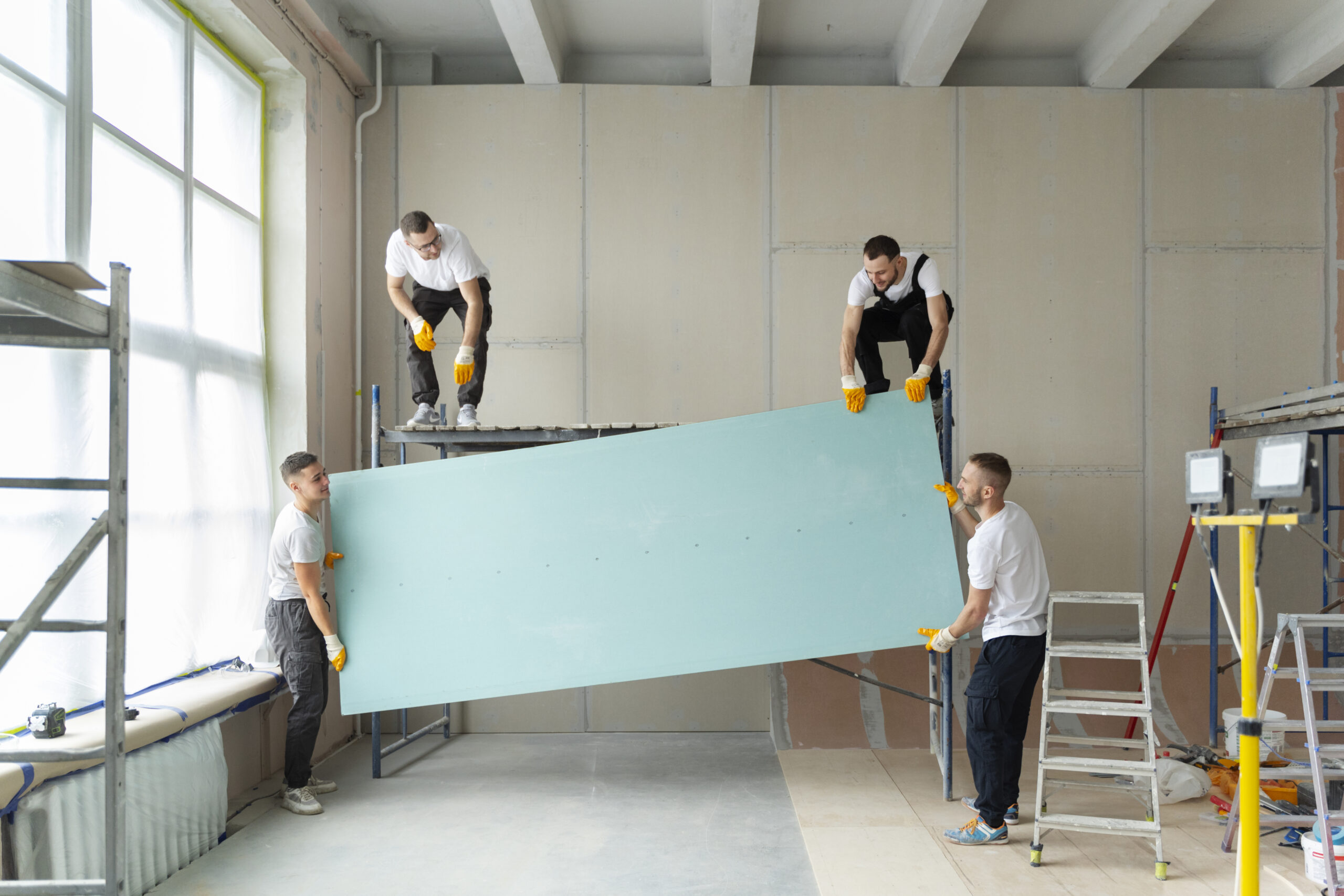
The Many Purposes of Drywall: A Comprehensive Guide
Drywall is a versatile and essential material in modern construction, offering numerous benefits beyond just creating walls and ceilings. Whether you’re a homeowner, landlord, or property manager, understanding the various purposes of drywall can help you make informed decisions about your property. In this blog, we’ll explore the key functions of drywall, including soundproofing, mold protection, fire protection, insulation values, and aesthetics. We’ll also cover proper installation and finishing techniques for new installs, repairs, and patches, as well as the different types of joint compound and the tools you’ll need.
Soundproofing
One of the significant advantages of drywall is its ability to enhance soundproofing. By using multiple layers of drywall and incorporating sound-dampening materials like acoustic insulation or resilient channels, you can significantly reduce noise transmission between rooms. This is particularly beneficial in multi-family homes, apartments, and office buildings where privacy and quiet are essential.
Mold Protection
Drywall can also play a crucial role in mold prevention. Mold-resistant drywall, often referred to as green board or purple board, is designed with a moisture-resistant core and a special coating that inhibits mold growth. This type of drywall is ideal for high-humidity areas such as bathrooms, kitchens, and basements, helping to maintain a healthy indoor environment.
Fire Protection
Fire-resistant drywall, also known as Type X drywall, contains non-combustible fibers that enhance its fire resistance. This type of drywall is commonly used in areas that require additional fire protection, such as garages, utility rooms, and between living spaces and attached garages. Installing fire-resistant drywall can help slow the spread of fire, providing valuable time for occupants to evacuate and for firefighters to respond.
Insulation Values
Drywall also contributes to the overall insulation of a building. While it doesn’t provide significant thermal insulation on its own, it works in conjunction with other insulation materials to create an effective barrier against heat loss and gain. Properly installed drywall helps maintain a comfortable indoor temperature and can contribute to energy savings.
Aesthetics
Beyond its functional benefits, drywall is a key component in achieving a smooth, finished look for your interiors. It provides a clean, flat surface that can be painted, textured, or wallpapered to match your design preferences. Drywall also allows for creative architectural features such as arches, niches, and custom ceilings, enhancing the overall aesthetic appeal of your space.
Installation and Finishing Techniques
New Installs:
- Measure and Cut: Measure the wall or ceiling area and cut the drywall sheets to fit. Use a utility knife to score and snap the drywall.
- Hang the Drywall: Secure the drywall sheets to the studs using drywall screws or nails, ensuring the sheets are flush and level.
- Tape and Mud: Apply joint tape over the seams and cover with a layer of joint compound (mud). Smooth it out with a drywall knife.
- Sand and Finish: Once the compound is dry, sand it smooth. Apply additional coats of compound as needed, sanding between each coat until the surface is smooth and ready for painting.
Repairs and Patches:
- Cut Out the Damaged Area: Use a utility knife or drywall saw to remove the damaged section.
- Install a Patch: Cut a new piece of drywall to fit the hole and secure it with screws or nails.
- Tape and Mud: Apply joint tape around the edges of the patch and cover with joint compound. Smooth it out and let it dry.
- Sand and Finish: Sand the area smooth and apply additional coats of compound if necessary. Sand again before painting.
Types of Joint Compound
- All-Purpose Compound: Suitable for all phases of drywall finishing, including embedding tape, filling, and finishing coats.
- Topping Compound: Used for the final coat, providing a smooth finish that’s easy to sand.
- Setting-Type Compound: Ideal for deep fills and repairs, it sets quickly and is less prone to shrinking and cracking.
Tools Required
- Utility knife
- Drywall saw
- Drywall screws or nails
- Drywall knife
- Joint tape
- Sanding block or pole sander
- Drill or screwdriver
- Measuring tape
Ready to enhance your property with the benefits of drywall? Whether you’re planning a new installation, repair, or upgrade, our team is here to help. Fill out our contact form today to get started on your next drywall project!
By understanding the various purposes and proper techniques for drywall installation and finishing, you can ensure your property is both functional and aesthetically pleasing. Don’t hesitate to reach out for professional assistance and make the most of your drywall projects.
0 Comments